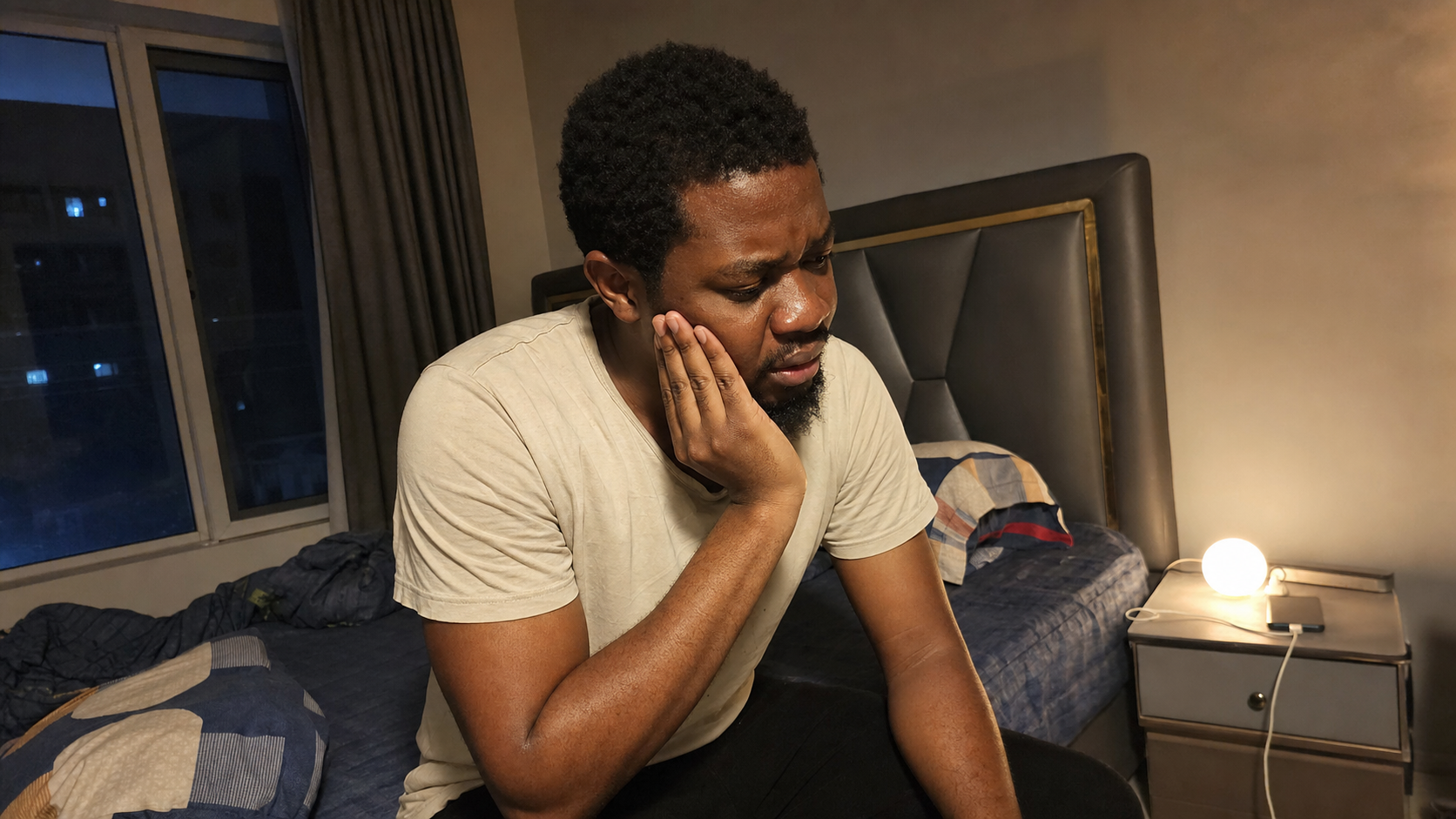
Tooth Pain at Night in Lekki: 7 Causes and What to Do Now
It is 2:17 a.m. You were managing the tooth all day, but the moment you lie down, it begins to throb. You turn to the other side, sit up, rinse your mouth and check the time again. If this sounds familiar, you are not imagining it. Tooth pain at night can feel more intense, and pain that repeatedly wakes you deserves proper dental attention.
For people living in Lekki, the immediate question is usually simple: “Can this wait until morning, or is it an emergency?” This guide explains the common causes, what you can safely do tonight, what to avoid, and the warning signs that mean you should seek urgent help.
Clinically reviewed by Dr Ola Adebayo.
Why does tooth pain feel worse at night?
Tooth pain at night does not necessarily mean the tooth suddenly became more damaged. Instead, several things can make existing pain more noticeable. When you lie flat, blood flow and pressure around the head may increase, which can intensify throbbing from an inflamed tooth. During a busy Lekki day, work, traffic, calls and conversation also compete for your attention. At night, the room is quiet and there is little to distract you from the pain.
Some people clench or grind their teeth while sleeping. Others have decay or an inflamed tooth nerve that reacts badly to temperature and pressure. The important point is that a toothache is a symptom, not a diagnosis. The pattern of pain gives your dentist useful clues, but an examination and sometimes an X-ray are needed to identify the cause.
Seven common causes of tooth pain at night
1. A cavity that has reached the inner tooth
Early decay may cause no discomfort. As it moves through the enamel and dentine towards the pulp—the soft centre containing nerves and blood vessels—the tooth may become sensitive to cold, heat or sweet foods. When the pulp becomes badly inflamed, pain can start without eating or drinking anything. It may throb, linger and wake you from sleep.
A small cavity may be treated with a filling. If the nerve is irreversibly inflamed or infected, root canal treatment in Lekki may be needed to remove the source of the pain while preserving the tooth.
2. A dental abscess
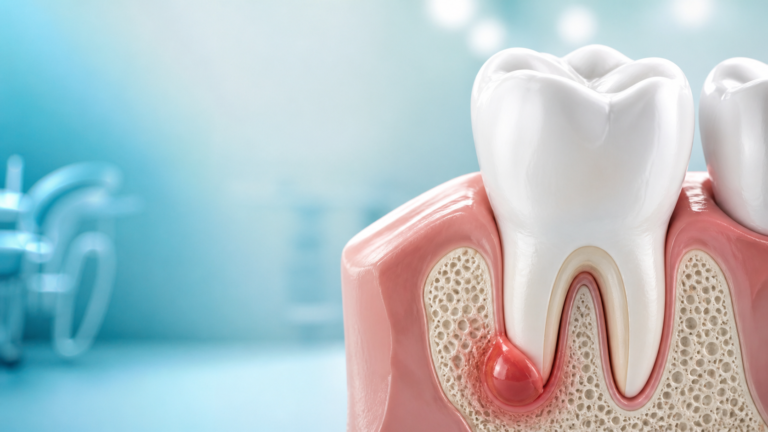
An abscess is a pocket of infection associated with a tooth or the surrounding gum. Possible signs include severe throbbing, pain when biting, a bad taste, a pimple-like swelling on the gum, fever, facial swelling or tender glands. An abscess will not be cured by painkillers alone.
If you suspect an infection, read our guide to tooth abscess symptoms and emergency signs. Treatment may involve draining the infection and treating or removing the affected tooth, depending on the examination.
3. A cracked tooth or damaged filling
A small crack can be surprisingly difficult to locate. You may feel a sharp pain when biting, especially as you release the bite, or sensitivity when cold water touches the tooth. A filling can also loosen or fracture, allowing pressure and temperature changes to irritate the tooth underneath.
Do not keep testing the painful tooth with hard food. Avoid chewing on that side and arrange an assessment before a repairable crack becomes a larger fracture.
4. Wisdom-tooth inflammation
A partly erupted wisdom tooth can trap food and bacteria beneath a flap of gum. The area may become sore, swollen or difficult to clean, and the pain can spread towards the ear, throat or jaw. You may also notice a bad taste or difficulty opening your mouth fully.
Our detailed guide explains the signs that may lead to wisdom tooth removal in Lagos. Not every wisdom tooth needs extraction, so an examination is important.
5. Teeth grinding or clenching
Stress, concentration and sleep-related grinding can overload the teeth and jaw muscles. You might wake with a dull toothache, tight jaw, temple headache or teeth that feel tender when you bite. A dentist should first rule out decay, cracks and infection; similar symptoms can have different causes.
6. Gum inflammation or exposed roots
Receding or inflamed gums can expose sensitive root surfaces. This often causes a short, sharp response to cold drinks or brushing. If the gum is swollen, bleeds frequently or the tooth feels loose, do not assume it is “just sensitivity.” Gum disease needs assessment and professional care.
7. Pain referred from somewhere else
Sinus pressure can sometimes feel like pain in several upper back teeth. Jaw-joint problems and facial nerve conditions may also mimic toothache. This is one reason self-diagnosis is unreliable. If an examination shows that the tooth itself is healthy, your dentist can consider other causes and refer you appropriately.
What you can safely do before morning
These steps may reduce tooth pain at night temporarily, but they do not replace dental treatment:
- Keep your head elevated. Use an extra pillow or rest in a more upright position if lying flat makes the throbbing worse.
- Rinse gently with warm salt water. Dissolve about half a teaspoon of salt in a cup of warm—not hot—water, rinse and spit it out. Children should not use this method if they may swallow the mixture.
- Clean the area carefully. Brush gently and remove any obvious food trapped between the teeth. Do not force floss into a swollen or very painful area.
- Choose soft, lukewarm food. Avoid chewing on the painful side and stay away from very hot, cold or sugary foods.
- Ask a pharmacist about pain relief. Paracetamol or ibuprofen may be appropriate for some adults, but not for everyone. Follow the packet instructions and tell the pharmacist about pregnancy, ulcers, kidney disease, asthma, blood thinners, allergies and other medicines.
The NHS toothache guidance also recommends dental assessment when pain persists, does not settle with pain relief, or occurs with fever, pain on biting, a bad taste or swelling.
What not to put on a painful tooth
When pain strikes after midnight, people understandably reach for whatever is available. Some common remedies can burn the gum, irritate the tooth or delay proper care.
- Do not place aspirin directly on the tooth or gum.
- Do not pour alcohol, petrol, battery liquid or harsh chemicals into the mouth.
- Do not apply crushed painkillers, bleaching products or undiluted essential oils.
- Do not start leftover antibiotics or share another person’s prescription.
- Do not repeatedly press, puncture or attempt to drain a swelling yourself.
Antibiotics are not a universal treatment for toothache. Dental pain often requires a procedure that removes the cause. The American Dental Association’s acute dental pain guidance describes medicine as temporary support when definitive dental treatment is not immediately available—not a substitute for treatment.
When tooth pain needs urgent dental care
Because tooth pain at night has several possible causes, contact a dentist promptly if the pain is severe, keeps waking you, continues for more than a day or two, does not respond to appropriate pain relief, or comes with any of the following:
- pain when biting or a tooth that feels “high”;
- fever, weakness or feeling generally unwell;
- a bad taste, pus or a gum boil;
- swelling of the gum, cheek or jaw;
- a broken tooth or lost filling causing pain;
- difficulty opening your mouth; or
- pain spreading towards the ear, jaw or neck.
Dovers Dental Clinic provides same-day emergency dental care in Lekki. Call or WhatsApp the clinic as early as possible, explain when the pain started, whether there is swelling, and what makes it better or worse. That helps the team assess how urgently you should be seen.
When to go directly to a hospital
Go to the nearest hospital emergency department immediately if swelling around the mouth, face or neck is affecting your breathing, swallowing or speech; if swelling is closing an eye; or if you are becoming very unwell. These are not symptoms to watch at home.
Severe spreading dental infection can threaten the airway. Urgent dental-care guidance treats spreading facial swelling and infection with possible airway involvement as an emergency requiring rapid clinical assessment.
What will the dentist do?
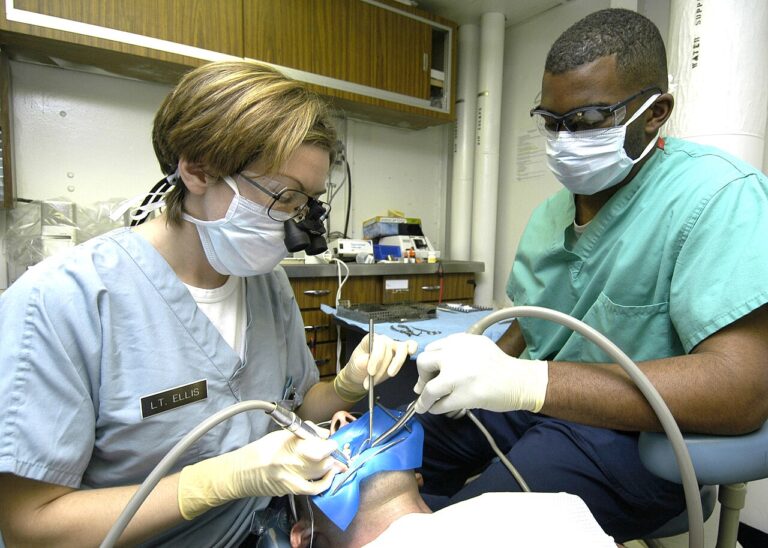
Your appointment begins with questions about the pain: when it started, whether it lingers after hot or cold drinks, whether biting hurts, and whether it wakes you spontaneously. The dentist examines the teeth, gums and jaw. They may gently test individual teeth and take a digital X-ray where needed.
Treatment depends on the diagnosis. It might be a filling, repair of a damaged restoration, cleaning around an inflamed wisdom tooth, treatment of the gums, a night guard after disease has been excluded, root canal treatment, drainage of an infection, or extraction when a tooth cannot reasonably be saved.
A responsible dentist should not promise a treatment—or quote an exact final cost—before examining the tooth. At Dovers Dental Clinic, the dentist explains the findings, suitable options and your personalised quotation after assessment.
Frequently asked questions about tooth pain at night
Why does my tooth stop hurting in the morning?
A temporary reduction does not prove that the problem has healed. Dental pain can come and go. In some cases, pain reduces when the nerve loses vitality, while infection continues around the root. Arrange an assessment if the pain was severe, recurrent or woke you from sleep.
Can a sensitive tooth cause night pain?
Ordinary sensitivity usually produces a brief response to cold, air, sweet food or brushing. Spontaneous throbbing that continues after the trigger is removed, or pain that wakes you, needs investigation for deeper inflammation, a crack or infection.
Will antibiotics stop the toothache?
Not necessarily. Antibiotics do not repair decay, remove an inflamed nerve or fix a cracked tooth. They may be prescribed when a dentist finds particular signs of spreading or systemic infection, but the tooth usually still needs definitive treatment.
Should I wait until the pain becomes unbearable?
No. Earlier assessment often gives the dentist more options to save the tooth and can prevent a manageable problem from becoming an emergency.
The practical answer for Lekki residents
If tooth pain at night keeps returning or wakes you tonight, sit upright, use only safe short-term relief, avoid harmful home remedies and look for warning signs. If there is facial swelling, fever, uncontrolled pain or difficulty swallowing or breathing, seek urgent help. Otherwise, contact a dentist as early as possible in the morning rather than beginning another cycle of painkillers and sleepless nights.
To arrange an assessment in Lekki Phase 1, contact Dovers Dental Clinic. The team can examine the tooth, explain the real cause and recommend the appropriate next step.
This article provides general dental information and is not a substitute for an examination or personalised medical advice.