Dental X-Ray Safety in Lagos: 9 Important Facts

Dental X-ray safety in Lagos is a reasonable concern. Patients in Lagos often ask whether the radiation could harm them, whether an X-ray is safe during pregnancy, and why an image is needed when the painful tooth is already visible.
The short answer is that modern dental imaging uses a low dose of radiation and should be prescribed only when the expected diagnostic benefit outweighs the small risk. The correct image can reveal decay, infection, bone loss or an impacted tooth that cannot be assessed properly by sight alone.
1. Dental X-ray safety begins with a genuine clinical need
A dentist should not take X-rays simply because every patient receives the same package. The decision should follow your symptoms, examination, dental history, age, previous images and risk of disease. A new patient may need existing images reviewed before more are taken.
Ask what the image is intended to show and how it may affect treatment. A good explanation could be: “This small image will help us check whether decay has reached the nerve,” or “This wider image will show the position of the wisdom tooth before we plan treatment.”
2. Dental X-ray safety in Lagos depends on choosing the right image
“Dental X-ray” is not one single test. A bitewing image usually shows the crowns of upper and lower back teeth and is useful for finding decay between teeth. A periapical image shows the whole tooth, its root and nearby bone, which can help assess infection or trauma.
A panoramic image gives a broad view of both jaws, teeth and surrounding structures. It may help with impacted wisdom teeth, development and treatment planning, but it does not replace every small detailed image.
Cone-beam computed tomography, or CBCT, creates a three-dimensional view. It can be valuable for selected implant, surgical, endodontic or orthodontic questions. Its exposure is generally higher than a small intraoral image and varies by machine and field size, so CBCT should be limited to cases where 3D information is genuinely needed.
3. Modern equipment supports dental X-ray safety in Lagos
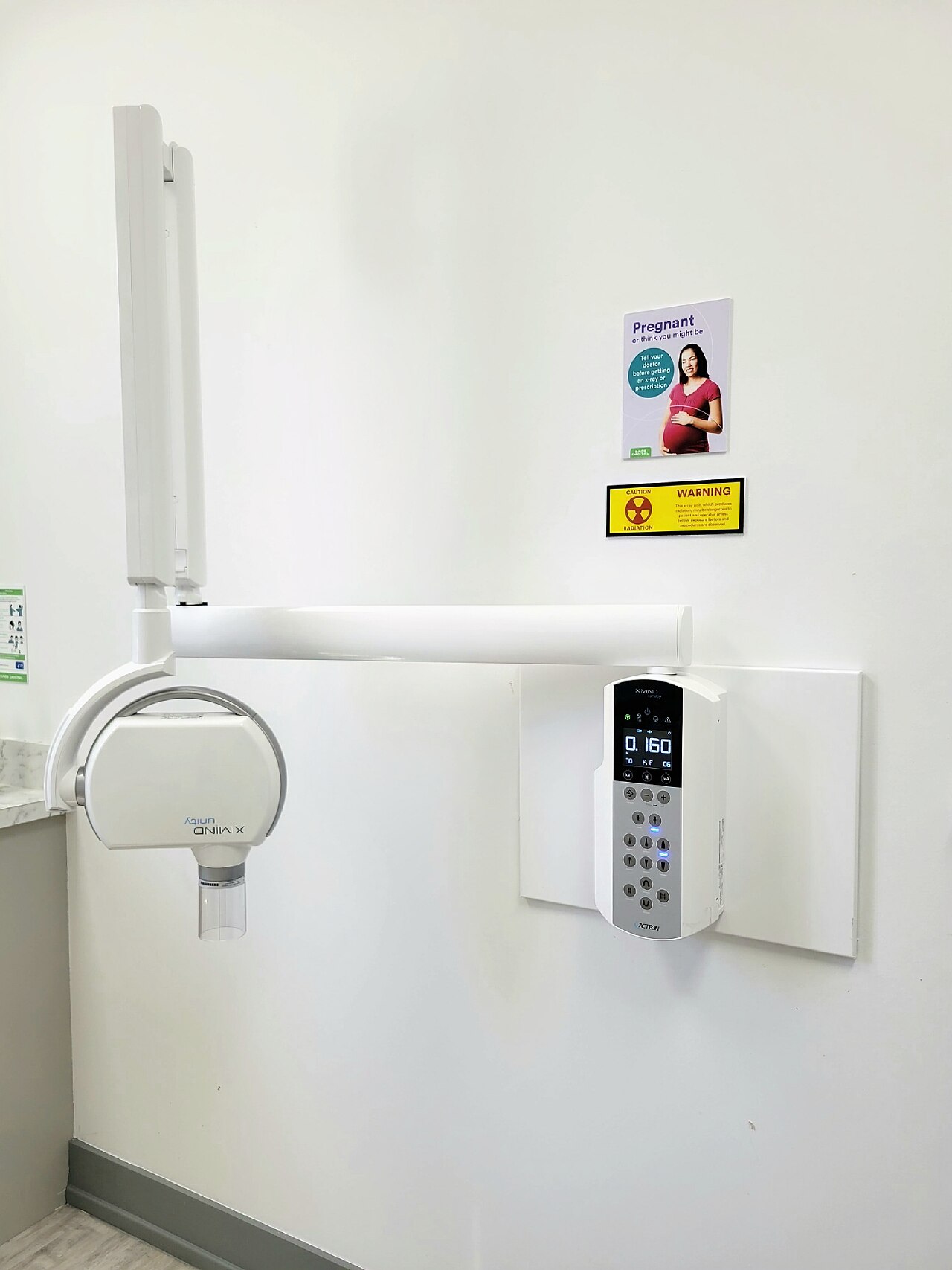
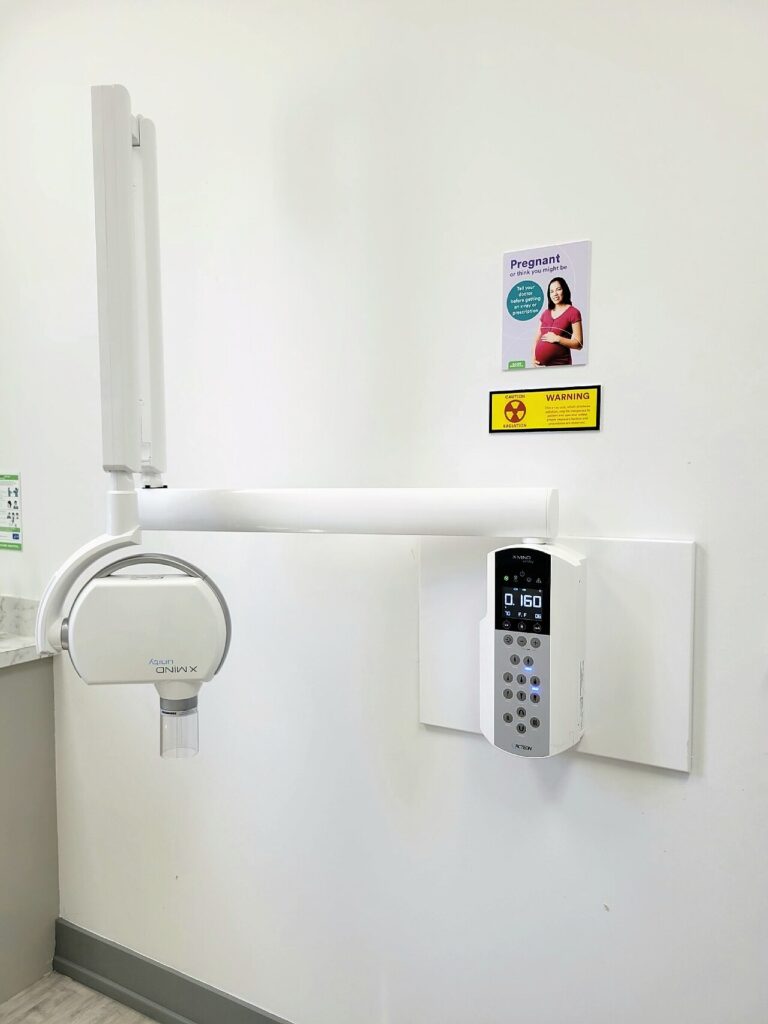
Digital receptors, appropriate exposure settings, careful positioning and proper maintenance all support dental X-ray safety. Rectangular collimation can restrict the beam to the area being imaged. Correctly trained staff also reduce avoidable retakes.
No responsible clinic should promise “zero radiation.” Dental X-rays use ionising radiation. The more accurate statement is that exposure is kept as low as reasonably achievable while still producing an image good enough to answer the clinical question.
4. Routine lead aprons are no longer universally recommended
Many people remember wearing a heavy lead apron or thyroid collar for every dental image. Current guidance from the American Dental Association and the American Academy of Oral and Maxillofacial Radiology says routine abdominal or thyroid shielding is no longer recommended for dental X-rays when modern equipment and proper technique are used.
This change can feel surprising. It does not mean protection has become less important. Modern beam restriction, digital technology and correct positioning provide more useful dose reduction, while a misplaced shield can cover the area of interest and cause a repeat image. Local rules, equipment and individual circumstances may still influence a clinic’s procedure, so ask your dental team if you are unsure.
5. Dental X-ray safety in Lagos during pregnancy
Tell your dentist if you are pregnant, may be pregnant or are undergoing fertility treatment. Pregnancy is not an automatic reason to ignore pain, infection or swelling. Necessary dental X-rays can be taken during pregnancy when the information is needed for diagnosis or safe care.
An urgent dental infection can create its own health risks. Your dentist should assess the clinical need, choose the most appropriate image and use an optimised technique. Elective images that will not change immediate care may be deferred, but there should be no blanket rule that a pregnant patient must wait while a serious problem worsens.
6. Children need individualised imaging decisions
Children are still developing, so careful prescription matters. However, there is no responsible one-size-fits-all timetable such as “every child must have an X-ray every six months.” Frequency should depend on the child’s examination, tooth contacts, decay risk, symptoms, growth and existing records.
A child with active cavities may need closer monitoring than a child with low risk and open spaces between the teeth. Parents can ask what the image will show and whether an earlier usable image already exists.
7. Dental X-ray safety in Lagos uses risk-based timing
Some adults require images more often because they have active decay, gum disease, a history of extensive treatment or new symptoms. Others with stable oral health may go longer between images. This risk-based approach is central to dental X-ray safety.
A dental examination and an X-ray are not substitutes for one another. The examination shows colour, texture, swelling, mobility and other clinical signs; the image reveals structures beneath the surface. Your dentist combines both sources of information.
8. X-rays help with night pain and hidden infection
A toothache that wakes you at night, lingers after hot or cold drinks, or comes with swelling can suggest inflammation or infection inside a tooth. An X-ray may help show deep decay, changes near the root or bone loss, although the result must be interpreted alongside clinical tests.
If facial swelling is spreading, you have fever, difficulty swallowing or breathing, or you feel very unwell, seek urgent care. Do not delay because you are frightened of an image. Read our guide to tooth abscess warning signs.
9. Patients can help prevent unnecessary repeat images
Tell the clinic about recent dental X-rays and ask whether copies can be transferred. Stay still and follow positioning instructions during the exposure. Remove jewellery or removable appliances when requested because they may obscure the image.
If an image must be repeated, it is fair to ask why. Sometimes movement, positioning, anatomy or an equipment issue prevents a diagnostic result. The aim is not merely to produce a picture; it is to obtain useful information without avoidable exposure.
Dental X-ray safety in a relatable Lagos situation
Consider an illustrative example. A patient in Lagos develops severe pain in a heavily filled lower tooth and worries that an X-ray will expose her entire body to dangerous radiation. The dentist explains that a small periapical image is being recommended to assess the root and surrounding bone. After examination and imaging, the team can discuss whether the tooth needs root canal treatment, another restoration or extraction.
The important point is informed choice. The patient understands the question being investigated, the type of image selected and how the result will guide care.
Dental X-ray safety in Lagos: questions to ask first
- What problem are you trying to confirm or rule out?
- Which type of image is appropriate, and why?
- Do you have a usable recent image already?
- How will the result change my treatment?
- What steps are used to reduce exposure and avoid retakes?
- Is this image necessary today, especially if I am pregnant?
Common questions about dental X-ray safety
Can a dental X-ray cause cancer?
Ionising radiation carries some risk, and risk generally increases with cumulative exposure. A necessary, properly performed dental image involves a low dose, but it should never be taken casually. The benefit-risk decision and dose optimisation are what make dental X-ray safety meaningful.
Are digital dental X-rays completely safe?
No medical exposure can honestly be described as completely risk-free. Digital systems can support lower exposure and efficient imaging when correctly used, but proper prescription, technique and maintenance still matter.
How often should I have dental X-rays?
There is no universal interval for everyone. Your symptoms, examination, disease risk and previous images should determine the timing.
Should I refuse an X-ray if I have no pain?
Not automatically. Early decay and bone loss may not hurt. Ask why the image is recommended and decide with your dentist based on your individual risk.
Where can I discuss dental X-ray safety in Lagos?
You can discuss your symptoms, previous images and concerns with a qualified dentist. To arrange an assessment, visit the Dovers Dental Clinic website. The clinic does not publish fixed treatment prices because the correct plan depends on examination and diagnosis.
Trusted source
Reviewed by Dr Ola Adebayo.
This article is for general education. It does not replace an examination, diagnosis or personalised medical advice.
If you have been advised to take an X-ray and still have questions, book an assessment at Dovers Dental to discuss what is appropriate for your case.