Children’s Dentist in Lagos: 9 Essential Things Parents Should Know

Choosing a children’s dentist in Lagos should not begin only when your child has severe toothache. Early, calm visits help prevent decay, teach useful habits and make future dental care feel familiar rather than frightening.
This practical guide explains when to book the first visit, what happens during an appointment, how to prepare a nervous child and which warning signs need urgent attention.
1. Visit a children’s dentist in Lagos by age one
The first dental visit should take place when the first tooth appears and no later than the first birthday. That can sound surprisingly early, but the purpose is prevention. The dentist checks development, feeding habits, fluoride use and early signs of decay while giving parents advice suited to the child.
Do not wait for every baby tooth to appear. A short, positive first visit is usually easier than introducing dentistry during a painful emergency.
2. Baby teeth matter
Primary teeth help children chew, speak clearly and maintain space for permanent teeth. Untreated decay can cause pain, disturbed sleep, difficulty eating, school absence and infection. A badly damaged baby tooth is not automatically harmless because it will eventually fall out.
Early white or chalky marks near the gumline can be the first sign of decay. Brown spots, holes, swelling, persistent bad breath or a child avoiding one side while chewing deserve examination.
3. What happens at the first appointment
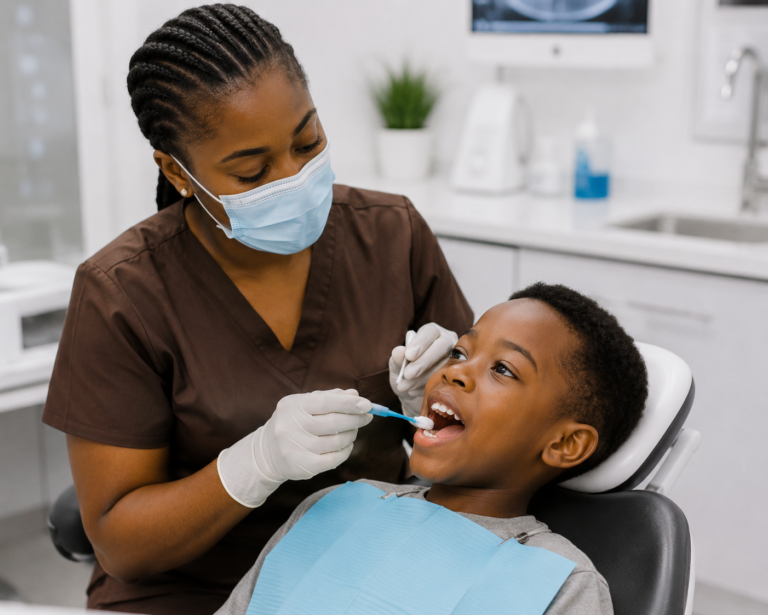
A good first visit is gentle and age-appropriate. For a baby or toddler, the parent may hold the child while the dentist briefly examines the teeth, gums, bite and mouth. The team may demonstrate brushing and discuss bottles, breastfeeding, snacks, thumb sucking and teething.
X-rays are not automatic. A dentist should recommend an image only when the child’s symptoms, examination, risk or development make it useful. Read our guide to dental X-ray safety in Lagos.
4. Prepare your child without creating fear
Use simple, neutral language: “The dentist will count and clean your teeth.” Avoid warnings such as “It won’t hurt,” because the word “hurt” may create anxiety. Do not describe your own difficult dental experience in front of the child.
Book at a time when your child is usually rested, not hungry or rushing from school. Bring relevant medical information, a list of medicines and details of any pain or injury. A familiar comfort item may help a young child.
5. Look for child-friendly clinical behaviour
A suitable children’s dentist in Lagos should communicate at the child’s level, explain procedures to the parent, use appropriate behaviour-guidance techniques and avoid humiliating a frightened child. The team should answer questions about diagnosis, alternatives and aftercare.
Some children cooperate immediately; others need several short visits. Developmental differences, sensory needs, previous trauma and medical conditions can change the approach. Tell the clinic what helps your child feel safe.
6. Prevention is more than brushing
Brush twice daily from the first tooth with fluoride toothpaste. Use a rice-grain smear for children under three and a pea-sized amount from ages three to six, with adult supervision. Parents should complete the brushing until the child has the coordination to clean effectively.
Frequency of sugar matters. Repeated biscuits, sweets, sweet yoghurt, flavoured drinks, juice or sweetened pap throughout the day expose teeth to frequent acid attacks. Offer water between meals and keep sugary items occasional and tied to mealtimes.
Finish the bedtime feed before brushing once teeth appear. Avoid putting a child to sleep with a bottle containing milk, formula, juice or a sweet drink.
7. Fluoride and sealants can reduce risk
A dentist may recommend fluoride varnish based on the child’s age and decay risk. Dental sealants are protective coatings placed in the deep grooves of selected back teeth. They do not replace brushing, but they can help protect areas that are difficult to clean.
Recommendations should be individual. Ask what is being proposed, why your child needs it and how it will be maintained.
8. Know which symptoms need urgent care
Arrange prompt dental care for pain, a broken tooth, a loose tooth after injury, swelling, pus, fever with dental symptoms or difficulty eating. Facial swelling that is spreading, difficulty swallowing or breathing, or a child who appears seriously unwell requires urgent assessment.
If a permanent tooth is knocked out, hold it by the crown, avoid touching the root and seek emergency care immediately. Read our knocked-out tooth guide. Do not reinsert a knocked-out baby tooth because it could damage the developing permanent tooth.
9. Fees depend on the child’s actual needs
Dovers Dental does not publish fixed treatment prices as company policy. The appropriate fee depends on the examination, diagnosis, imaging if needed, the tooth involved, the child’s cooperation and the treatment selected.
A responsible clinic should explain the recommended plan and provide a personalised quote after assessment. Be cautious of a price given without enough information to identify the problem.
A relatable Lagos example
Consider an illustrative example. A five-year-old in Lagos begins chewing only on the left side but says nothing hurts. His parent notices a dark area in a lower molar and books a visit. The dentist finds decay before swelling develops, explains the options and shows the parent how frequent after-school biscuits contributed to the risk.
The point is not to blame the family. A helpful children’s dentist in Lagos turns the visit into a practical prevention plan that fits school, work and home routines.
Questions to ask a children’s dentist in Lagos
- What did you find during the examination?
- Does my child need an X-ray today, and why?
- What are the treatment options and alternatives?
- How will you help if my child is anxious?
- What can we change at home to prevent another problem?
- Does my child need fluoride varnish or sealants?
- When should the next check-up be?
- What symptoms mean we should return sooner?
Parents comparing clinics can also use our guide on how to choose the best dental clinic in Lagos. In addition to child-friendly communication, confirm professional registration, infection control, diagnosis and follow-up arrangements.
Common questions
Is a children’s dentist different from a family dentist?
Many general dentists treat children, while paediatric dentists have additional specialist training. What matters is appropriate qualifications, experience with the child’s age and needs, safe clinical practice and clear communication.
How often should a child visit?
The interval depends on age, development and risk of decay. A child with active disease may need closer monitoring than a child at low risk. Follow the personalised recall recommended after examination.
What if my child cries?
Crying is common in young or anxious children. A calm team should protect the child’s dignity, keep the parent informed and decide whether treatment can proceed safely or should be staged.
Can toothpaste cure a cavity?
No. Fluoride may help arrest very early changes under professional guidance, but toothpaste cannot rebuild a hole or treat an infected tooth.
Where can I book a children’s dentist in Lagos?
You can arrange an assessment through the Dovers Dental Clinic website. Bring your questions, medical information and any previous dental records.
Your home checklist
- Brush twice daily with the correct small amount of fluoride toothpaste.
- Supervise brushing and clean every tooth surface.
- Offer water between meals and limit frequent sugary snacks.
- Book the first visit by age one.
- Use a mouthguard for relevant contact sports.
- Seek help early for spots, holes, pain, injury or swelling.
The best relationship with a children’s dentist in Lagos is built through prevention, honest explanations and visits that respect the child. Early care is usually simpler and less stressful than waiting for an emergency.
Trusted sources
- American Academy of Pediatric Dentistry: Dental Home by Age One
- AAPD: Periodicity of Examination and Preventive Services
- AAPD: Fluoride Therapy
Reviewed by Dr Ola Adebayo.
This article provides general education and does not replace an examination, diagnosis or personalised medical advice.
For a gentle visit focused on prevention and your child’s comfort, explore child dental care at Dovers Dental.